
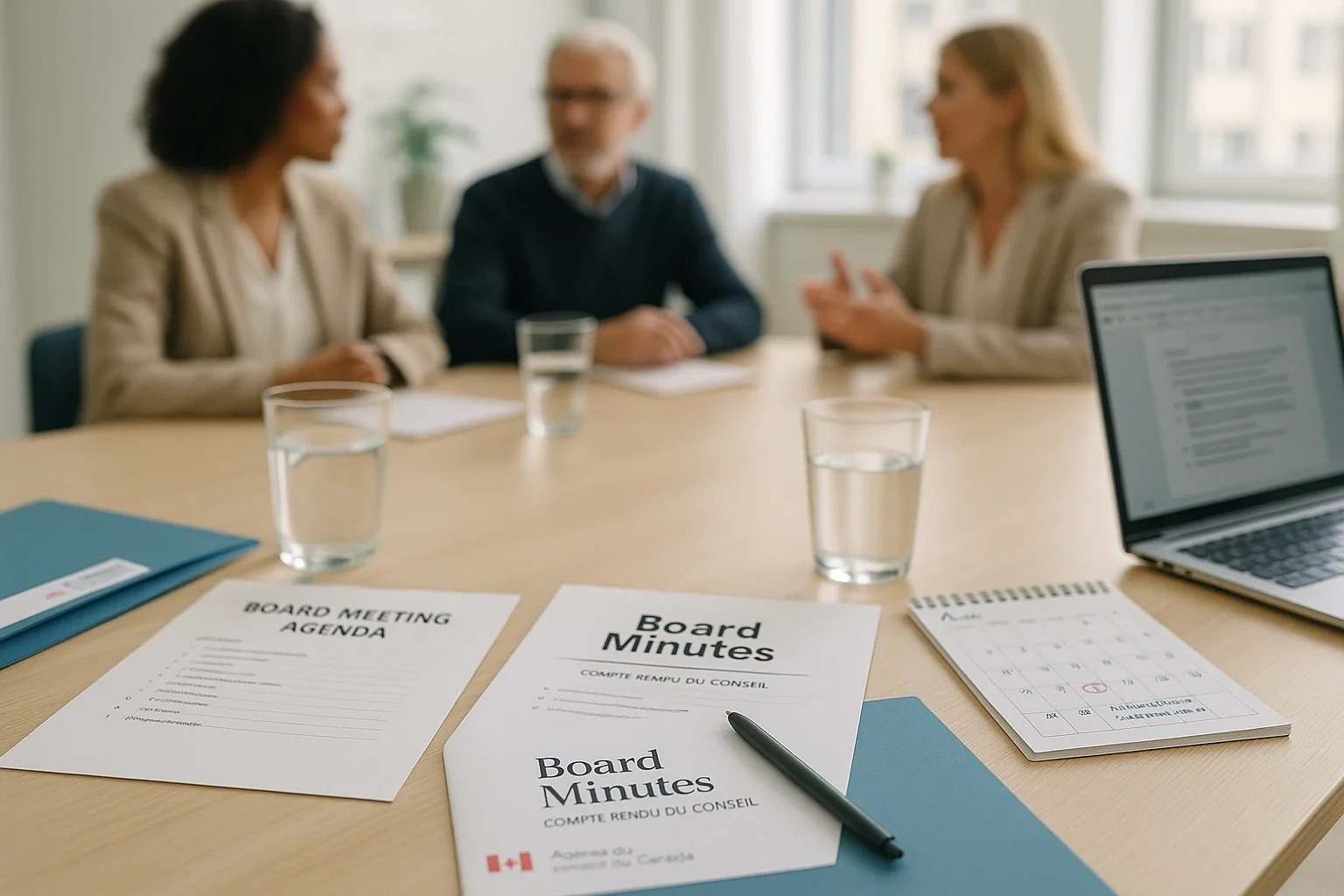
Many Canadian nonprofit board secretaries struggle to create meeting minutes that meet legal requirements while remaining practical and useful. Board meeting minutes for Canadian nonprofits must include meeting details, attendee lists, motions with voting results, and key decisions. The Canada Not-for-Profit Corporations Act requires accurate documentation to maintain charitable status and ensure regulatory compliance. This guide covers essential elements of effective board meeting minutes, your legal obligations as a Canadian charity, and practical tools to streamline documentation. We'll help you create minutes that protect your organization while supporting good governance.
Quick Answer: What Must Be in Board Meeting Minutes?
TL;DR - Board Meeting Minutes Requirements:
✓ Meeting date, time, and location✓ Names of attendees and absentees (with quorum confirmation)✓ All motions made and voting results✓ Action items with assigned responsibilities and deadlines✓ Approval of previous minutes✓ Chair and secretary signatures✓ Conflicts of interest declared
Time to prepare: 30-60 minutes per meeting.
Retention period: Permanent (required by Canada Not-for-Profit Corporations Act)Legal basis: Canada Not-for-Profit Corporations Act, Section 20-23
Quick checklist: Before storing your minutes, verify they answer these questions:
Who attended and was quorum met?
What decisions were made?
How did members vote on each motion?
Who is responsible for follow-up actions?
When are action items due?
Understanding Board Meeting Minutes
Board meeting minutes are official records of decisions and discussions during meetings. They are different from informal meeting notes because they follow legal requirements and specific formatting standards.
Purpose of Meeting Minutes
Meeting minutes have several important functions for Canadian charities and nonprofits. They create a permanent legal record that protects organizations from disputes or regulatory issues.
Legal compliance is a primary purpose. The Canada Not-for-Profit Corporations Act requires organizations to keep accurate meeting records, proving that boards followed proper procedures when making decisions. Minutes promote accountability and transparency by showing members, donors, and regulators how leaders make decisions. This builds trust and demonstrates good governance.
Historical documentation helps future boards understand past decisions. New members can review previous minutes to learn about the organization’s direction and the reasoning behind major choices. Minutes also protect individual board members by showing that directors fulfilled their duties and made informed choices.
Differences Between Meeting Minutes and Meeting Notes
Meeting minutes and meeting notes have different purposes and characteristics. Understanding these differences helps you create proper documentation. Meeting minutes are formal, official records that meet legal requirements. They focus on decisions, motions, and action items, using neutral language and avoiding personal opinions or detailed conversations. Meeting notes are informal records that capture ideas and discussions. They may include personal observations and preliminary thoughts that do not lead to formal decisions. Nonprofit board meeting minutes must include elements like attendance, voting results, and conflict of interest declarations. Meeting notes do not require these formal components. Board meeting minutes need formal approval at the next meeting. Meeting notes do not need board approval.
Board Meeting Minutes Checklist for Canadian Nonprofits
Use this comprehensive checklist to ensure you capture everything required for compliant board meeting minutes.
Before the Meeting:
□ Review previous minutes for outstanding action item follow-ups
□ Prepare attendance sheet with all board members listed
□ Have approved agenda ready and distributed
□ Set up recording device if your board permits recordings
□ Confirm quorum requirements from bylaws
□ Prepare templates for motions and voting records
□ Ensure laptop/tablet is charged for digital minute-taking
□ Have backup paper and pen available
During the Meeting:
□ Record exact start time and location (or virtual platform)
□ Mark attendance and note who is absent
□ Confirm and record that quorum is established
□ Document each motion verbatim as presented
□ Record who moved and who seconded each motion
□ Capture vote counts (for/against/abstentions) for every motion
□ Note any conflicts of interest declared
□ Record action items with specific names and deadlines
□ Document any amendments to previous minutes
□ Note exact end time of meeting
After the Meeting:
□ Draft minutes within 48 hours while memory is fresh
□ Use your organization's standard template for consistency
□ Share draft with board chair for preliminary review
□ Make any necessary corrections based on chair feedback
□ Distribute draft to all board members at least 5 days before next meeting
□ Store draft securely at registered address
□ Add "Draft Minutes - Pending Approval" to the header
□ Schedule minutes for approval at next meeting agenda
□ After approval, remove "draft" designation and add approval date
□ Have chair sign approved minutes
□ File approved minutes in permanent organizational records
Time-Saving Tip: Create a digital folder structure like this:
Minutes/2026/01-January/Draft
Minutes/2026/01-January/Approved
Minutes/2026/01-January/Supporting-Documents
Key Elements of Board Meeting Minutes for Charities and Nonprofits
Board meeting minutes for Canadian charities and nonprofits must include specific information to meet legal requirements and maintain transparency. You need to document attendance, decisions, and action items assigned during each meeting.
Required Information and Format
Each set of nonprofit board meeting minutes must include basic information about the meeting. Record the organization’s name, meeting date, start and end times, and location. List the meeting agenda items in order. Document each topic discussed and any motions made.
Essential elements include:
Organization name and meeting type
Date, time, and location details
Meeting chair and secretary names
Approval status of previous minutes
Financial reports presented
Use clear, simple language and avoid jargon. Keep the format consistent across all meetings to make records easy to follow. Board meeting minutes are legal documents. Make sure they accurately reflect what happened without including personal opinions or unnecessary details.
Attendance and Quorum
Record who attended each board meeting and note any absences. This shows whether enough board members were present to make valid decisions.
Attendance records should include:
Names and titles of all attendees
Board members who were absent
Guests or staff members present
Confirmation that quorum was met
Quorum requirements vary by organization but usually require a majority of board members. Note when quorum is established at the start of the meeting. If quorum is lost during the meeting, record when this happened. Decisions made without quorum may not be legally valid. Document if board members joined late or left early. This shows who was present for each decision.
Capturing Agenda and Decisions
Record each agenda item discussed during the meeting in an organized manner. Focus on decisions made rather than detailed discussion summaries. For each topic, note the key points discussed and any motions presented. Record whether motions were approved, rejected, or tabled for future consideration.
Action items must include:
Specific tasks assigned
Responsible board members
Completion deadlines
Follow-up requirements
Do not record individual opinions or lengthy debates. Summarize the main points that led to each decision. Pay special attention to financial matters. Note budget approvals, expense authorizations, and audit reports presented. Summarize committee reports briefly with any recommendations accepted or rejected. Document new committees formed and any changes to existing ones. Need help structuring your board meetings? Check out our comprehensive guide on what should be included in the agenda for a non-profit board meeting in Canada for better meeting outcomes.
Legal Compliance and Governance Requirements
Canadian charities and nonprofits must meet strict legal standards for recording and maintaining board meeting minutes. These requirements protect organizations from legal issues and ensure proper governance and transparency for stakeholders.
Regulatory Obligations and Recordkeeping
The Canada Not-for-Profit Corporations Act requires all registered organizations to maintain accurate meeting records. Organizations must keep these minutes for the entire duration of their existence. Provincial legislation also applies. In Ontario, the Corporations Act sets additional recordkeeping standards.
Key recordkeeping requirements include:
Meeting date, time, and location
Names of all attendees and absentees
Decisions made and voting outcomes
Action items with assigned responsibilities
Approval of previous meeting minutes
Store minutes in a secure location where authorized board members can access them. Digital storage is acceptable if you maintain backups and security.
Retention periods vary by province:
Minutes: Permanent retention required
Supporting documents: Minimum 6 years
Financial records: 7 years from fiscal year end
Failure to maintain proper records can result in loss of charitable status or nonprofit registration.
Fiduciary Duties and Legal Protection
Board members have legal fiduciary duties that meeting minutes help document and protect. Minutes show that directors acted with care, loyalty, and good faith in all decisions.
Minutes serve as evidence that board members:
Reviewed relevant information before voting
Asked appropriate questions during discussions
Declared conflicts of interest when required
Made decisions in the organization's best interests
Proper documentation protects board members from personal liability. Courts often review meeting minutes when disputes arise about board decisions or governance practices. Record the rationale behind major decisions. This shows the board considered options and made informed choices.
Minutes must demonstrate:
Due diligence in decision-making
Compliance with organizational bylaws
Adherence to conflict of interest policies
Proper authorization of expenditures and contracts
Without adequate documentation, board members may face personal legal exposure for organizational decisions.
Confidentiality and Access Restrictions
Not all meeting information should be widely shared. Balance transparency with the need to protect sensitive organizational matters.
Confidential information includes:
Personnel discussions and salary negotiations
Legal matters and pending litigation
Strategic planning details
Donor information and major gift discussions
Create separate in-camera minutes for confidential sessions. Limit distribution of these minutes to essential board members only. Access rights vary by stakeholder group. Members usually have broader access than the public, while donors may request specific financial information.
Access guidelines:
Board members: Full access to all minutes
Organization members: Access to non-confidential minutes
Regulatory bodies: Full access during audits or investigations
General public: Limited access based on provincial legislation
Establish clear policies about who can request minutes and what information you will share. Some organizations provide summary versions that remove sensitive details while maintaining transparency about key decisions and governance practices.
Roles and Responsibilities
The board secretary manages meeting records and documentation. Board members oversee organizational governance and legal compliance. These roles work together to ensure proper meeting minutes and maintain transparency in Canadian charities and nonprofits.
Duties of the Board Secretary
The board secretary manages all meeting documentation and organizational records. This role involves more than taking minutes during meetings.
Primary Documentation Duties:
Record accurate meeting minutes during board sessions
Maintain official copies of bylaws and governing documents
Distribute meeting minutes to board members promptly after meetings
Ensure meeting records comply with Canadian legal requirements
The secretary must capture key discussion points, decisions, and action items. Draft minutes within 48 hours of each meeting while details remain fresh.
Record Management Responsibilities:
Store meeting minutes at the organization's registered Canadian address
Keep records in English or French as required by law
Maintain historical files for future board reference
Protect confidential information when sharing documents
The secretary also prepares meeting agendas with the board chair. This includes gathering committee reports and ensuring all necessary documents are ready for review.
Responsibilities of Board Members
All board members share responsibility for reviewing and approving meeting minutes. Each member must participate in the approval process.
Review and Approval Duties:
Read draft minutes before each meeting
Identify errors or missing information
Vote on approval of previous meeting minutes
Request corrections when necessary
Approved minutes become official legal records. Careful review before approval is essential.
Governance Oversight:
Ensure minutes reflect accurate decisions and discussions
Verify action items and deadlines are recorded
Confirm attendance records are correct
Support the secretary in maintaining proper documentation
Members should ask questions if minutes are unclear or incomplete. The board collectively ensures compliance with the Canada Not-for-Profit Corporations Act through proper minute-keeping.
Best Practices for Writing Effective Meeting Minutes
Effective meeting minutes require clear documentation, proper action item tracking, and consistent formatting. Focus on accuracy, maintain neutrality, and use standardized templates to ensure compliance with Canadian nonprofit regulations.
Clarity, Accuracy, and Neutrality
Write meeting minutes in simple language that everyone can understand. Avoid complex terms and keep sentences short. Record information accurately to meet legal requirements under the Canada Not-for-Profit Corporations Act. Capture what actually happened without adding opinions or interpretations. Use neutral language to protect the organization from legal issues. For example, write "The board discussed budget concerns" instead of "Members were worried about financial problems."Key elements for clear minutes include:
Simple vocabulary that board members can easily read
Objective statements without emotional language
Specific details about decisions made
Brief summaries of discussions without long explanations
Review minutes for spelling errors and unclear statements before sharing them. This prevents confusion and ensures records are professional.
Documenting Action Items and Follow-Ups
Action items are a key part of meeting minutes. Clearly show what tasks were assigned and their deadlines. Each action item should include three pieces of information:
What needs to be done
Who is responsible for the task
When the deadline is
Format action items in a simple table:
| Task | Responsible Person | Deadline |
|---|---|---|
| Review fundraising proposal | Sarah Johnson | August 15, 2025 |
| Contact grant agency | Mark Wilson | July 30, 2025 |
This format helps board members see their responsibilities. Note any follow-up actions from previous meetings to track progress.
Consistency in Format and Templates
Use a meeting minutes template to create consistent records every time. Include the same sections for each meeting. Standard sections include:
Meeting date, time, and location
List of attendees and absent members
Approval of previous minutes
Discussion topics and decisions
Action items with deadlines
Next meeting date
Keep the same formatting style for all minutes. Use the same fonts, spacing, and headings throughout.A consistent template saves time during preparation. Board members can find information easily when all minutes follow the same structure. Store templates in a shared location for easy access. This keeps the format the same even when different people take minutes.
Templates and Tools for Board Meeting Minutes
Use a standardized minutes template to ensure consistency and meet legal requirements. Digital tools can help board secretaries record minutes more accurately.
Sample Board Meeting Minutes Template
A well-structured template helps board secretaries capture all required information. Include basic meeting details like date, time, location, and attendees.
Essential template sections include:
Meeting header with organization name and meeting type
Attendance tracking for present and absent members
Approval of previous minutes with any amendments noted
Agenda items with discussion summaries and decisions
Action items with assigned responsibilities and deadlines
Signature lines for chairperson approval
Use clear headings and bullet points in the template. This makes information easy to find and review later. Many organizations customize their meeting minutes template to fit their needs. Some add fields for financial reports or committee updates.
Digital Tools and Software
Board management software makes the minutes process easier. These tools often include built-in templates and automatic formatting. Digital tools provide automatic backup, easy distribution, and searchable records. They offer several advantages over paper-based systems. Some software includes voting features and action item tracking. This helps ensure follow-up tasks get completed on time.
Key features to look for:
Template customization options
Secure document storage
Email distribution capabilities
Integration with calendar systems
Conclusion
Proper board meeting minutes help Canadian nonprofits meet legal requirements under the Canada Not-for-Profit Corporations Act while maintaining transparency with donors and members. Good minutes create a clear record of decisions that helps future board members understand past choices.Taking accurate minutes doesn't have to be complicated. Use simple templates and focus on recording who attended, what was discussed, and what actions were decided. This approach ensures you capture essential information without getting overwhelmed by unnecessary details. Ready to improve your nonprofit's governance? Sign up to get started with tools and resources that help Canadian charities and nonprofits succeed with better organizational management and compliance support.
Frequently Asked Questions
Many charities and nonprofits in Canada have questions about their meeting minutes. These questions cover topics like public access, filing requirements, recording methods, and what information to include.
Are nonprofit board meeting minutes public in Canada?
Board meeting minutes for Canadian nonprofits and charities are not automatically public. Members usually have access rights based on organizational bylaws. The Canada Revenue Agency can request minutes during audits, but charities must balance transparency with privacy.
How to take minutes for a board meeting?
Prepare with agenda and attendance list ready. Record basic details (date, time, location, attendees), focus on decisions and actions, use simple language, and review notes immediately after the meeting while details are fresh.
Do board meeting minutes need to be filed?
Canadian nonprofits must keep meeting minutes but don't typically file them with government agencies. Store minutes at your registered address where members and officials can inspect them. Check provincial laws for additional requirements.
What should be recorded in board minutes?
Include meeting details, attendance, all motions with voting results, action items with deadlines and responsible parties, meeting start/end times, and any declared conflicts of interest.
What not to include in board meeting minutes?
Avoid personal opinions, detailed conversations, confidential information, personal conflicts, your own interpretations, and information that violates privacy laws. Keep content neutral and factual.
What is the role of the board of directors in maintaining the integrity of meeting minutes for Canadian nonprofits?
The board chair oversees minute-taking, members review and approve previous minutes, the secretary typically records meetings, directors speak clearly to help minute-takers, and the board ensures proper storage and access controls.