
How to Take Notes at a Board Meeting in a Canadian Charity
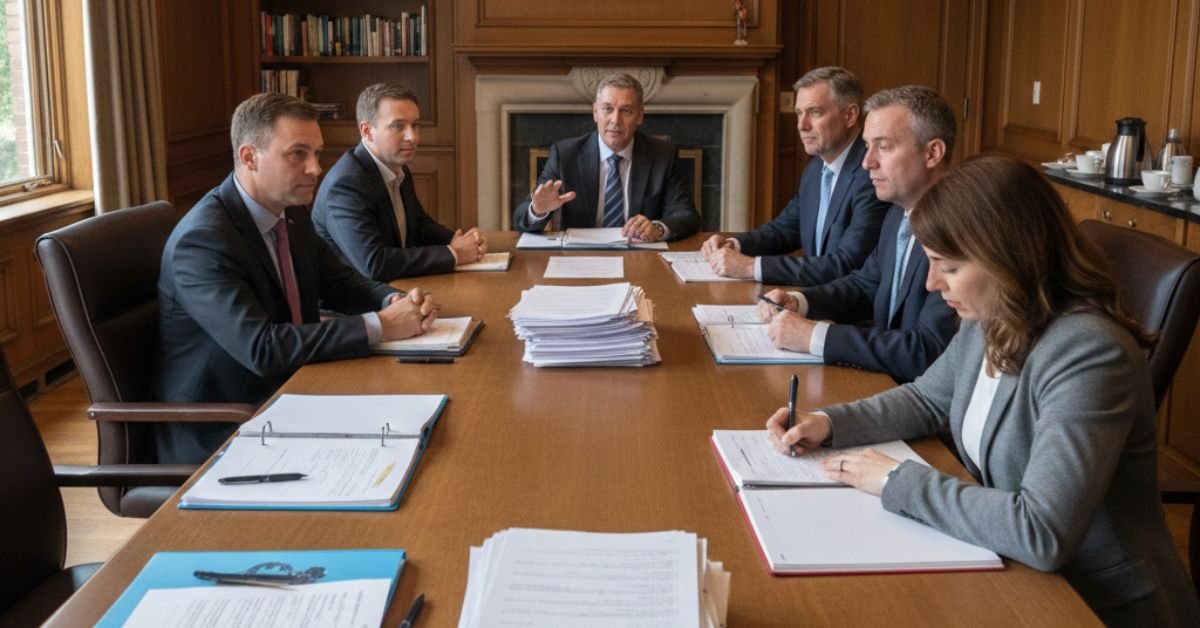
Board meetings are the backbone of good governance for Canadian charities. These meetings shape your organization's direction and handle financial decisions.
Taking proper notes at these meetings protects your charity and keeps everyone accountable. The key to taking notes at a board meeting is understanding the difference between informal notes and official meeting minutes. Minutes serve as the legal record of decisions made, while notes help you track discussions and tasks.
The Canada Revenue Agency requires charities to keep adequate records, including minutes, to prove your activities remain charitable and to maintain your registered status.
Without proper documentation, your charity could face compliance problems or lose important details about past decisions.
This guide walks you through everything you need to know about taking notes at board meetings for Canadian charities.
You'll learn what information must be captured, how to prepare before meetings start, and the best ways to organize your records.
Whether you're new to board meetings or looking to improve your current process, these practical steps will help you create clear and useful records.
Understanding Board Meeting Minutes and Notes
Board meeting minutes and notes serve different functions in your charity. Minutes create an official legal record, while notes are working documents that help you prepare those minutes.
Purpose of Meeting Minutes
Meeting minutes are the official record of what happens during your board meetings. They document decisions, resolutions, and voting results.
Your minutes serve as legal protection for board members and the organization. They show that your board made informed decisions and followed proper procedures.
This protects directors from personal liability when minutes accurately document their actions.
Minutes provide several key functions:
Legal evidence of compliance with regulations
Accountability to members and donors
Historical reference for future boards
Proof of proper governance practices
The Canada Revenue Agency uses your minutes to verify that your charity operates according to its mission and legal requirements.
Minutes also help board members remember decisions and track action items between meetings.
Difference Between Meeting Notes and Minutes
Meeting notes are informal working documents that capture detailed discussions during your board meeting. You use these notes to prepare the official minutes, but they hold no legal weight.
Board meeting minutes are formal documents that become part of your charity's permanent records. They focus only on decisions made, motions passed, and actions taken by the board.
Key differences include:
Notes capture detailed discussions and background information
Minutes record only what was decided and who made decisions
Notes can include personal opinions and explanations
Minutes must remain factual and neutral
Your notes might include arguments, different viewpoints, and reasoning behind discussions. The official minutes should never contain this level of detail.
Legal Pro Tip: Destruction of Rough Notes
Once your board approves the official minutes, consider destroying your rough working notes. Here's why: if your charity becomes involved in a lawsuit or legal dispute, those rough notes become discoverable legal documents that can be subpoenaed by opposing counsel.
If a director's personal working notes contradict the official approved minutes, this creates significant legal liability for your organization. The rough notes could be used to challenge the accuracy of your official record or suggest that important information was deliberately excluded.
However, you should never destroy notes if litigation is reasonably foreseeable or already underway. Consult with your legal advisor to establish a clear policy about when and how to handle working notes, especially if any legal proceedings might occur.
Importance for Canadian Charities
Canadian charities must keep proper meeting minutes under the Canada Not-for-profit Corporations Act. Failing to maintain adequate minutes can result in legal problems and loss of charitable status.Your minutes must include specific elements like date, time, attendance, resolutions, and voting records. Board and member meeting minutes are permanent records that must be kept for the entire life of the charity and for two years after the organization is dissolved. While financial vouchers and receipts need to be kept for at least six years under CRA rules, corporate minutes have different requirements and should be maintained permanently.
Members of your charity have the legal right to inspect minutes from members' meetings (such as Annual General Meetings). However, board of directors' meeting minutes are generally confidential to the directors unless your bylaws specifically grant members access to them. This distinction is important for understanding what records need to be available for member inspection.
Accurate nonprofit board meeting minutes demonstrate transparency to stakeholders and regulatory bodies. They show that your charity follows proper governance procedures and makes decisions that align with your charitable purpose.
Legal and Regulatory Requirements in Canada
Canadian charities and nonprofits must follow specific federal and provincial laws when keeping board meeting records. The Canada Revenue Agency also has clear expectations about how you document board decisions and activities.
Canada Not-for-profit Corporations Act Overview
If your charity is federally incorporated, you must follow the Canada Not-for-profit Corporations Act (CNCA). This law requires you to keep minutes of all board and member meetings at your registered office or another designated location.
You must also record all resolutions passed during these meetings. The CNCA gives directors and members the right to inspect meeting minutes, though this right applies specifically to members' meeting minutes rather than board minutes unless your bylaws state otherwise.
Your organizational bylaws should outline specific procedures for how minutes get approved. The CNCA requires approval to happen at the next meeting or within a reasonable timeframe.
Board members have fiduciary duties under the CNCA. Proper meeting records help prove that directors met these duties by showing how decisions were made and what factors the board considered.
You must keep board and member meeting minutes permanently as part of your organization's official documentation. These permanent records must be maintained for the life of the charity and for two years after dissolution.
Recording Director Dissent to Protect Against Personal Liability
The CNCA includes critical provisions about director liability and dissent under Section 123. Understanding these rules is essential for protecting individual board members from personal legal responsibility.
Under Section 123 of the CNCA, if a director disagrees with a board decision that may lead to organizational liability—such as unpaid wages, taxes, employee source deductions, or other financial obligations—they are automatically deemed to have consented to that decision unless their dissent is specifically recorded.
How directors can properly record their dissent:
Have their dissent entered in the minutes of the meeting where the decision was made
Send a written dissent to the secretary of the organization immediately after the meeting
Send a written dissent by registered mail to the registered office immediately after learning of the resolution (if they were absent from the meeting)
Why this matters: If a risky financial decision is made—such as failing to remit employee source deductions, approving expenditures the charity cannot afford, or taking on debt the organization cannot service—directors who voted against these decisions must have their opposition clearly documented. Without this documentation, they can be held personally liable for the organization's obligations, even if they actively opposed the decision.
Example scenario: Your board votes to delay remitting GST/HST payments to cover an urgent operational expense. You vote against this decision because you know it violates tax law. Unless your dissent is recorded in the minutes or you send written notice to the secretary, you could be held personally liable for the unpaid taxes along with the directors who voted in favour.
This makes accurate minute-taking essential for protecting individual directors who oppose potentially problematic financial or legal decisions.
For more information: Corporations Canada provides detailed guidance on directors' liability and the dissent process at: https://ised-isde.canada.ca/site/corporations-canada/en/directors-liability-and-dissent
Provincial Legislation for Charities and Nonprofits
Each province has its own corporation act with specific requirements for meeting minutes:
Ontario: The Ontario Not-for-Profit Corporations Act requires nonprofits to maintain complete meeting records permanently
British Columbia: The BC Societies Act mandates detailed documentation of all board meetings
Alberta: The Alberta Societies Act includes specific minute-keeping requirements
Other provinces: Check your provincial legislation for exact requirements
Your bylaws must comply with both federal and provincial laws. Provincial laws often add requirements beyond federal rules, so you need to follow whichever standard is stricter.
Most provinces require you to keep minutes indefinitely or permanently. Like the federal CNCA, the Ontario Not-for-Profit Corporations Act (ONCA) also includes dissent provisions. Directors who disagree with board decisions that could create liability must have their dissent recorded in the minutes to avoid being deemed to have consented to those decisions.
CRA Recordkeeping Expectations
The Canada Revenue Agency expects registered charities to maintain complete and accurate meeting records as part of their books and records. While the CRA requires charities to keep financial records such as vouchers and receipts for at least six years from the end of the fiscal year, board and member meeting minutes are permanent corporate records that should be kept for the life of the organization.
Your minutes must document all major decisions affecting charitable activities. This includes how funds are used, program decisions, and policy changes.
The CRA uses these records during audits and compliance reviews to verify that your charity operates according to its stated purpose.
The CRA also expects to see evidence that your board meets regularly. At a minimum, you should hold an annual general meeting and document those AGM minutes carefully.
Your records must show active board oversight and proper governance of charitable resources.
Preparation Before the Board Meeting
Good preparation helps you take accurate notes and capture all important information. You need the right documents, a clear understanding of the agenda, and confirmation that enough board members will attend.
Reviewing the Meeting Agenda
The meeting agenda guides your note-taking during board meetings. Get a copy at least 24 hours before the meeting starts.
Read through each agenda item carefully. Some topics need more detailed notes than others. Financial reports and policy decisions usually require more attention. Create headings in your note-taking template for each agenda item to keep your notes organized.
Key agenda elements to note:
Items requiring formal votes
Reports from committees or officers
New business items
Time allocated for each topic
Check if any agenda items relate to previous meetings. Review those earlier minutes to understand the background.
This helps you recognize when discussions continue from past meetings.
Gathering Necessary Documents
Collect all relevant documents before the meeting begins. You need these materials to understand discussions and take accurate notes.
Request copies of reports, financial statements, and proposals that board members will review. Having these documents lets you follow along during presentations.
Essential materials to gather:
Previous meeting minutes
Financial reports
Committee reports
Policy drafts or amendments
Correspondence requiring board action
Set up your note-taking tools and test them. Charge your laptop or tablet if taking digital notes.
Bring backup pens and paper in case technology fails. Create your note-taking template with standard sections for date, time, location, attendance, and each agenda item.
This template saves time during the meeting.
Identifying Attendees and Confirming Quorum
Contact the board chair or secretary to confirm who will attend. You need to know the expected attendees before the meeting starts.
Get the correct spelling of names and titles for all board members. This prevents errors when recording attendance and motions.
Check your organization's bylaws for quorum requirements. Quorum is the minimum number of board members needed to make official decisions. Under the Canada Not-for-profit Corporations Act and similar provincial legislation, the default quorum is a majority of the number of directors (or the minimum number of directors required by your articles). This is often 50% plus one director, though your bylaws may set a different quorum provided it meets the statutory minimum requirements for your jurisdiction.
Quorum considerations:
Total number of board positions
Number of members needed for quorum as specified in your bylaws
Rules for virtual attendance
Alternate members who can vote
Prepare an attendance sheet with all board member names. During the meeting, mark who attends and who is absent.
Note if absent members sent regrets or appointed proxies. Without quorum, the board cannot make binding decisions.
If attendance looks low, alert the board chair before the meeting. Committee meetings may have different quorum rules than full board meetings.
How to Take Effective Meeting Notes During the Meeting
During a Canadian charity board meeting, you need to capture specific information that meets legal requirements and helps the board function properly. Focus on recording attendance, motions, and action items as they happen.
Recording Attendance and Establishing Quorum
You must record who attends the meeting before any official business starts. Write down the names of all board members present, noting whether they attend in person or remotely.
List any regrets or absences. Check your charity's bylaws to confirm the quorum requirement. Your bylaws will specify the exact quorum needed, which under most Canadian corporate legislation defaults to a majority of directors unless your bylaws set a different threshold that meets statutory minimums. State in your notes that quorum was established before proceeding.
Include the names of any staff members, guests, or observers who attend. Note what time each person arrives if they come late or leave early.
This matters for votes and decisions made during the meeting.
Capturing Motions, Decisions, and Amendments
Record each motion exactly as stated, including who makes it and who seconds it. Write down the specific wording before any discussion begins.
If someone proposes a motion to amend, document both the original motion and the proposed change. Note the result of each vote.
You can write "carried unanimously" or record the specific vote count if directors vote against or abstain. For board decisions that affect your charity's direction or finances, include enough context so someone reading the notes later understands what was decided and why.
Recording Dissent for Director Protection
If any director disagrees with a motion that could create potential liability for the organization—such as decisions involving financial obligations, unpaid taxes, employee wages, or other legal responsibilities—you must record their dissent clearly in the minutes.
Under Section 123 of the Canada Not-for-profit Corporations Act, directors are automatically deemed to have consented to board decisions unless their dissent is formally recorded. This means that without documented opposition, a dissenting director can still be held personally liable for organizational obligations.
Best practices for recording dissent:
Note the director's name and that they voted against the motion
Record their specific objection if they state one (e.g., "Director Smith voted against the motion, citing concerns about the organization's ability to meet the financial commitment")
If a director requests their dissent be recorded even when not voting against a motion, document this request
Allow directors to review and confirm the accuracy of their recorded dissent before minutes are approved
Directors can also protect themselves by sending written dissent to the secretary after the meeting, which should then be attached to the minutes. This is especially important if a director was absent when a problematic decision was made and learns about it later.
For more information on directors' liability and dissent procedures, see: https://ised-isde.canada.ca/site/corporations-canada/en/directors-liability-and-dissent
Track any amendments separately. Write the original motion first, then show how it changed.
This creates a clear record if questions arise later about what the board approved.
Documenting Action Items and Deadlines
Create a clear list of action items as the board assigns them. Each item needs three details: what task needs completion, who will do it, and when it's due.
| Action Item | Responsible Person | Deadline |
|---|---|---|
| Submit grant application | Executive Director | March 15, 2026 |
| Review insurance policy | Treasurer | February 28, 2026 |
Write action items as they come up during discussion, not just at the end. Board members often assign tasks while talking about agenda items.
If you wait until later, you might miss important details about what needs to happen next. Note any follow-up items that don't have immediate deadlines but need attention at future meetings.
These help you prepare the agenda for your next board meeting.
Structure and Content of Formal Meeting Minutes
Meeting minutes for Canadian charities follow a specific structure that meets legal requirements under the Canada Not-for-profit Corporations Act.
The format should remain consistent across all meetings and include all mandatory information.
What to Include in Meeting Minutes
Your meeting minutes must document specific details to meet Canadian legal standards. Start with basic information like the date, start time, end time, and location of the meeting.
Record attendance by listing all board members present and absent.
Note whether quorum was achieved, as this affects the validity of decisions made.
Include the approval of previous minutes near the beginning. Document any corrections made before approval.
Required elements for each agenda item:
Topic or issue discussed
Motion wording (exact language)
Name of person who moved the motion
Name of person who seconded it
Vote result (carried or defeated)
Vote counts when applicable
Any dissenting votes and the names of directors who dissented
List all action items with the responsible person's name and deadline. Keep discussion summaries brief and factual. Document the adjournment time and date of the next meeting. The board chair or secretary signs the approved minutes.
Formatting Consistency and Clarity
Use the same layout for every meeting to create professional, easy-to-read records. Choose clear headings for each section and agenda item.
Write in past tense and third person. Use simple, direct language that avoids jargon or ambiguous terms.
Formatting guidelines:
Left-align text for easy reading
Use consistent fonts and spacing
Number pages if printing
Include organization name on each page
Add "Draft" watermark until approved
Bold or highlight action items so they stand out. Use tables to display voting records or financial decisions when helpful. Keep paragraphs short. Break up long blocks of text to improve readability.
Avoid recording individual opinions or detailed arguments. Focus on what was decided, not why people supported or opposed it.
Use of Templates and Samples
A board meeting minutes template saves time and ensures you capture all required information.
Your minutes template should include sections for every standard agenda item your board discusses.
Create your template based on your typical meeting agenda. Add headings for regular items like treasurer reports, committee updates, and new business.
Sample board meeting minutes from similar charities help you understand the appropriate level of detail. Look at how other organizations word motions and document decisions.
Your template should include:
Meeting header with date and time fields
Attendance section with member names
Space for each regular agenda item
Action items table with columns for task, person, and deadline
Section for recording dissents when applicable
Signature lines for chair and secretary
Save your template in an accessible location where the minute-taker can find it easily.
Update the template when your meeting structure changes. A good minutes template keeps writing nonprofit meeting minutes consistent across different secretaries or volunteers.
Best Practices and Tools for Taking and Managing Minutes
Board meeting minutes for Canadian charities require formal approval processes and secure storage systems to maintain their legal standing.
Modern board management software helps streamline these tasks while supporting transparency requirements that donors, members, and regulators expect.
Approval Process and Official Recordkeeping
You need to follow a clear approval process to make your minutes official. Most Canadian charities ask board members to review draft minutes before the next meeting, then vote to approve them at the start of that meeting. The approval of previous minutes should appear as the first item on your agenda.
Once approved, the board chair and secretary should sign the minutes. This signature confirms the document as an official record.
You must store approved minutes in a permanent file, either physical or digital, that your organization can access for audits or legal reviews. Board and member meeting minutes are permanent corporate records that must be kept for the life of your charity and for two years after dissolution. While the CRA requires financial records like vouchers and receipts to be kept for at least six years, your corporate minutes have different retention requirements and should be maintained permanently.Create a simple filing system that organizes minutes by date and year.Include any supporting documents that board members referenced during the meeting, such as financial reports or policy drafts.
Board Management Software and Portals
Board management software makes recording minutes easier and more secure than email or shared drives.
A board portal gives you one central place to store agendas, minutes, and meeting documents that only authorized people can access.
Popular options for Canadian charities include Boardable, BoardEffect, and Aprio Board Portal. These tools let you create agenda templates, assign action items, track votes, and generate minute drafts automatically.
Some platforms even record meetings and create transcripts you can review later. Security matters for charitable organizations.
Board portal software encrypts your files and controls who can view or edit them. You can set different permission levels for board members, staff, and committee members.
These tools also help with compliance. They track which board members attended meetings, when they reviewed documents, and how they voted. This documentation protects your charity if questions arise about board decisions.
Ensuring Transparency and Accountability
Canadian charities must balance transparency with confidentiality when managing minutes. Under the Canada Not-for-profit Corporations Act and similar provincial legislation, your members have the legal right to inspect minutes from members' meetings (such as Annual General Meetings). However, board of directors' meeting minutes are generally confidential to the directors unless your bylaws specifically grant members broader access rights. You should make AGM minutes and other members' meeting minutes available to members who request them.
Keep confidential board discussions in separate in-camera minutes that only board members can access.
Mark these sections clearly and store them in a restricted file. Include enough detail in your minutes to show that your board discussed important matters and made informed decisions.
Recording minutes should capture what the board decided and any significant concerns members raised, but you don't need to document every word spoken.
Action items need clear owners and deadlines. This accountability helps your board track progress and shows that decisions lead to real work.
When you review previous minutes at the next meeting, you can quickly see which tasks are complete and which need follow-up.
Considerations for Different Types of Board and Committee Meetings
Different meeting types require specific approaches to note-taking and documentation. Annual general meetings need detailed member attendance records.
Committee meetings focus on specialized work and recommendations. Confidential sessions require separate secure documentation.
Annual General and Special Meetings
Annual General Meetings (AGMs) require more detailed documentation than regular board meetings.
You must record all member attendees, not just board members, which can mean tracking dozens or hundreds of names depending on your organization's size.
Document all motions from the floor, including nominations for board positions and votes on constitutional changes.
Record exact vote counts for major decisions, especially amendments to bylaws or articles of incorporation.
Special meeting minutes must include:
Purpose of the special meeting and who called it
Notice requirements and confirmation of proper notice
Specific resolutions or matters discussed
Voting results with exact numbers when required by bylaws
Any emergency decisions requiring membership approval
AGMs often include financial report presentations and auditor appointments. Note when these reports were presented and whether members accepted them.
Keep copies of all reports referenced during the meeting with your minutes. Remember that members have a legal right to inspect minutes from AGMs and other members' meetings. These minutes should be clear, accurate, and maintained as permanent records alongside your board minutes.
Special meetings focus on urgent matters that cannot wait until the next regular meeting.
Your notes should explain why the special meeting was necessary and document that proper procedures were followed.
Committee and Ad Hoc Committee Meetings
Committee meeting minutes differ from full board minutes in scope and detail. Committees work on specific tasks or areas like finance, fundraising, or governance.
Record committee membership and attendance at each meeting. Note when the committee chair presents recommendations to the full board.
Your notes should clearly show what the committee decided versus what requires board approval.
Key elements for committee minutes:
Committee name and mandate
Progress updates on assigned tasks
Research findings or analysis completed
Recommendations for board consideration
Budget requests or financial matters
Timeline for deliverables
Ad hoc committees form for specific temporary purposes like strategic planning or executive director searches.
Document the committee's creation date, mandate, expected completion date, and final report. These committees dissolve once their work finishes, so your notes create the only permanent record of their activities.
Committee notes can be less formal than full board minutes but must still document decisions and action items clearly.
Dealing with Confidential and In Camera Sessions
In camera sessions exclude non-board members and cover sensitive matters. Create separate minutes for these confidential discussions and store them securely with restricted access.
Mark in camera minutes clearly as confidential. Only board members who attended the session should receive copies. Common confidential topics include personnel matters, legal issues, salary negotiations, and specific donor information.
In your regular minutes, note:
Time the board moved in camera
General topic category without details
Time the board returned to regular session
Any decisions requiring follow-up actions
Record detailed discussions and decisions in the separate confidential minutes. These documents follow the same legal requirements as regular minutes but have strict distribution limits.
Some provinces require certain employment discussions to happen in camera to protect staff privacy.
Document personnel decisions carefully, showing that proper procedures were followed and conflicts of interest were managed.
Never include confidential details in regular meeting notes that members or the public might access.
If an in camera decision affects public business, record only the final decision in regular minutes without revealing the confidential discussion.
Conclusion
Taking notes at board meetings for your Canadian charity doesn't have to be complicated. You just need to prepare before the meeting, listen carefully during discussions, and record the key decisions and action items clearly.
Good meeting minutes protect your organization and keep everyone accountable.
Ready to simplify your charity's board meetings? Orghub helps Canadian charities manage their governance documents, meeting minutes, and compliance requirements all in one place.
You can get started for free or contact us to learn more about how we support nonprofit organizations across Canada. If you're just starting out, you can also start your nonprofit with our step-by-step guidance.
Remember that your meeting minutes serve as the official record of your charity's decisions and actions.
They need to be clear enough for anyone to understand what happened and what comes next.
Store them securely and make sure they're easy to find when you need them for audits, CRA compliance, or future board meetings.
Frequently Asked Questions
Taking notes at Canadian charity board meetings involves specific roles, formats, and requirements that many board members and secretaries have questions about.
These answers address common concerns about preparation, documentation methods, and compliance with Canadian regulations.
How to take notes for a board meeting?
Start by preparing a template before the meeting that includes the date, time, location, and expected attendees.
Review the agenda so you understand the topics that will be discussed. During the meeting, focus on capturing decisions, votes, and action items rather than writing down everything that's said.
Record who made motions, who seconded them, and the vote results. Note any conflicts of interest and when board members declare them. If any director dissents from a decision that could create liability, ensure their dissent is clearly recorded to protect them legally.
Use shorthand or abbreviations while taking notes, but write the full minutes within 48-72 hours when the meeting is still fresh in your mind.
Keep your notes objective and factual without including personal opinions or judgements.
For virtual meetings, note which platform was used and track who joined remotely versus in person. Document any technical issues that affected participation.
How to prepare a board note?
A board note is different from meeting minutes. Board notes are internal documents used for planning and reference that don't need to follow the same formal requirements as official minutes.
Create board notes by outlining the key discussion points, background information, and recommendations for agenda items.
Include relevant data, reports, or financial information that board members will need to make informed decisions.
Share board notes with directors before the meeting so they can review materials and come prepared.
These notes help guide discussion but should not be confused with the official minutes that document what actually happened during the meeting.
After the meeting, you can update your board notes with outcomes and decisions, but these updated notes remain separate from the formal minutes that the secretary prepares.
What should I write down during a Canadian charity board meeting?
Record the meeting date, start and end times, location, and who attended or was absent. This is required under the Canada Not-for-profit Corporations Act.
Document all motions exactly as stated, including who made and seconded them. Note the vote results, including the count or any directors who voted against or abstained.
Write down action items, the person responsible, and any deadlines. Capture conflicts of interest declarations and note when directors leave the room during these discussions.
Record any dissents clearly, especially for decisions that could create organizational liability. Directors who dissent from potentially problematic decisions must have their opposition documented to avoid being deemed to have consented.
Record major decisions and a brief summary of the key reasons behind them. Include enough context so someone reading the minutes later understands what was decided and why.
Note any reports presented and whether they were accepted or approved. For registered charities, minutes should show board oversight of charitable activities.
What is the best format to take notes at a board meeting?
The best format depends on your organization's needs and provincial requirements. Most boards use a structured template to ensure all required information is captured.
Start with a header section containing meeting details and attendance. Organize the body by agenda items in order.
Use bullet points or numbered lists to make information easier to read. Include a clear action items section with tasks, responsible parties, and deadlines.
This section can be at the end or under each relevant agenda item. Many note-takers use a laptop or tablet for faster typing, while others prefer handwritten notes to transcribe later.
Choose the method that helps you keep up with the discussion and stay accurate. Consider a two-column format, with discussion in one column and action items in the other, to organize information as the meeting progresses.
Who is responsible for taking board meeting minutes in a Canadian charity?
The corporate secretary usually takes minutes at board meetings. This includes recording discussions, preparing draft minutes, distributing them, and maintaining the official minute book.
If the secretary cannot attend, the board should appoint someone else to take minutes for that meeting. Record this temporary appointment in the minutes.
Some organizations hire professional minute-takers or administrative staff. This allows board members to focus on governance without the distraction of note-taking.
When using a professional recorder, they should sign as "recorder," while the secretary or chair signs as "approved." The person taking minutes should remain neutral and objective.
Your organization's bylaws may specify who takes minutes and the approval process. Check these documents to understand your requirements.
How to write up notes from a meeting?
Begin writing your formal minutes within 48-72 hours. This helps ensure details are still clear in your memory.
Use your rough notes as a guide. Organize the information into a proper minute format. Start with the basic meeting information and attendance. Work through the agenda in order, documenting each item discussed.
Convert informal shorthand into complete sentences written in past tense. Remove personal opinions or unnecessary details.
Focus on decisions made and actions assigned. Include enough context to explain important decisions.
Proofread your draft for accuracy and clarity. Send the draft within one week so directors can review it before the next meeting.
Present the draft minutes for approval at the following board meeting. Make any corrections requested, then have the chairperson or secretary sign the approved version.
Legal Sources & References
Income Tax Act,CRA Guidance: Retention Period (Section 5.2).
CNCA,Section 21(1).
CNCA,Section 136(2).
ONCA,Section 34(2).
CNCA,Section 21(1) (Note: (a) lists minutes of meetings of members; (b) lists minutes of directors, butSection 22(1) only grants member access to records in 21(1)(a)).
ONCA,Section 92(1).
CNCA,Section 147.
ONCA,Section 45.