
What Is the Purpose of an Annual General Meeting for a Charity in Canada?
Canadian charities must hold an Annual General Meeting every year to meet their legal obligations and maintain good governance.
The purpose of an AGM is to provide transparency and accountability by allowing members to review financial statements, elect board members, and participate in important decisions about the organization’s direction.
These meetings create a formal space where charities demonstrate how they used donations and grants throughout the year.
The law requires both federally and provincially incorporated charities to hold AGMs within specific timeframes.
Missing these requirements can result in penalties or loss of charitable status.
Understanding what happens at an AGM and why it matters helps charities stay compliant while building trust with members and donors.
This article explains the legal requirements that govern AGMs in Canada and the procedures charities must follow.
It covers financial reporting obligations, member voting rights, and practical guidance for running effective meetings that meet legal standards and good governance principles.
Purpose and Importance of Annual General Meetings
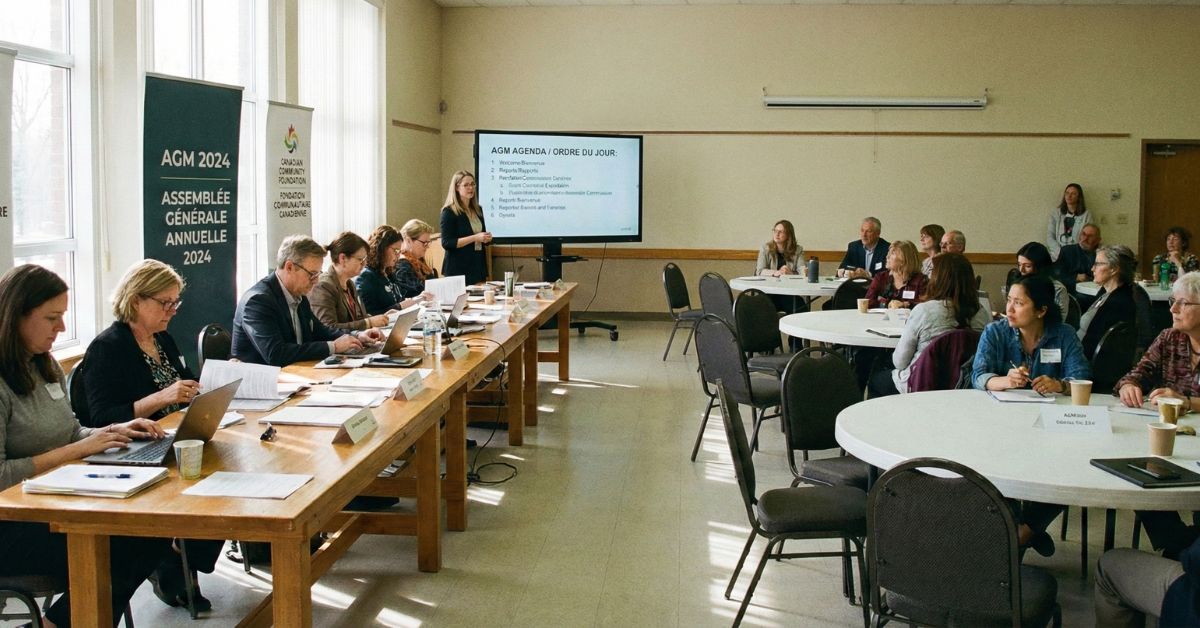
Annual general meetings are the foundation for how Canadian charities operate legally and maintain relationships with their members and supporters.
These yearly gatherings fulfill legal requirements and create opportunities for meaningful engagement and oversight.
Ensuring Accountability and Transparency
AGMs provide a formal structure for charities to show how they manage donated funds and resources.
During these meetings, board members present financial statements that show all income sources and expenditures from the past year.
Members can review balance sheets, income statements, and audit reports to see where money goes.
The Canada Not-for-Profit Corporations Act requires these financial presentations for federally incorporated organizations.
Provincial legislation like Ontario’s Not-for-Profit Corporations Act includes similar mandates.
Charities must prepare their financial records for member scrutiny.
This process helps prevent mismanagement and ensures leadership is answerable to members.
The AGM is a forum for board members to explain spending decisions and justify how resources support the charity’s mission.
Facilitating Member Participation and Governance
The AGM gives voting members direct influence over major organizational decisions.
Members elect or re-elect board directors who will guide the charity’s work for the coming term.
This process keeps leadership responsive to member priorities.
Members can also vote on bylaw changes, approve budgets, and discuss strategic direction.
The meeting allows members to raise concerns, ask questions, and propose new initiatives.
Each member receives notice at least 21 days before the meeting with the agenda, giving time to prepare questions or concerns.
Not-for-profit corporations must maintain a quorum as defined in their bylaws to conduct official business.
This ensures decisions reflect adequate member input.
Building Trust with Donors and the Public
Regular AGMs signal to donors and the public that a charity operates with integrity and openness.
When charities consistently hold these meetings and share results, they show commitment to proper governance.
Potential donors often research an organization’s transparency before contributing significant funds.
Missing an AGM deadline or failing to hold meetings damages credibility.
Donors may question whether their contributions are managed responsibly.
The public expects Canadian charities to maintain high standards since these organizations receive tax benefits and handle charitable donations.
AGMs also help charities maintain their legal status.
Organizations that skip meetings or fail to meet the 15-month deadline risk penalties or loss of charitable registration.
This compliance protects the charity’s ability to issue donation receipts and maintain public trust.
Legal Requirements for Charities in Canada
Canadian charities must follow specific legal rules depending on whether they operate under federal or provincial law.
These rules cover when to hold meetings, how to notify members, and what records to keep.
Canada Not-for-profit Corporations Act Compliance
The Canada Not-for-profit Corporations Act sets the rules for federal non-profit corporations.
Charities incorporated under this act must hold an annual general meeting within 15 months of their previous AGM and within six months of the organization’s fiscal year end.
Directors must send a notice of the meeting to all members at least 21 days before the AGM.
Organizations can send notices electronically if members have access to email.
The notice must include the meeting date, time, location, and an agenda of topics to be discussed.
Federal non-profit corporations need to keep proper records of all AGM proceedings.
This includes minutes that document attendance, motions passed, and decisions made.
The organization must make these minutes available to members who request them.
Ontario Not-for-profit Corporations Act (ONCA) Guidelines
The Ontario Not-for-profit Corporations Act applies to charities incorporated in Ontario.
ONCA follows similar timing rules as federal legislation.
Charities must hold their AGM at least once every 15 months and within six months after the fiscal year ends.
Ontario charities must establish a record date to determine which members can vote at the AGM.
The record date cannot be more than 50 days before the meeting.
Organizations must refer to their member register to identify who holds voting rights on the record date.
ONCA requires charities to provide financial statements along with the meeting notice in some cases.
Public benefit corporations face extra review requirements for their financial records.
The bylaws of each organization outline specific quorum requirements and voting procedures for the AGM.
Notice and Record Date Procedures
The notice period gives members time to review materials and prepare for the AGM.
Charities must send notices at least 21 days in advance under both federal and Ontario rules.
The notice should include financial statements, proposed bylaw changes, and information about board elections.
The record date determines which members appear on the member register for voting purposes.
Organizations set this date before sending out meeting notices.
Only members listed on the register as of the record date can vote.
Charities need to keep their member register current and accurate throughout the year.
The register must include each member’s name, contact information, and membership status.
This document helps the organization meet legal compliance and ensures proper notice delivery.
Key Components of an Annual General Meeting
Every AGM follows a structured format that includes legal requirements and essential business items.
These components ensure the meeting fulfills its obligations and keeps members informed about the charity’s operations.
Presentation of Financial Statements and Reports
Financial statements are a core part of any AGM.
The board must present a complete financial picture, including the balance sheet, income statement, and details about how the charity spent its funds over the past year.
Members need to see where donations and grants went.
The financial report should be clear enough for people without accounting backgrounds to understand.
Larger charities may need to have their financial statements reviewed or audited by a professional accountant before presenting them.
The board also presents an annual report covering the charity’s activities and accomplishments.
This report shows members what programs ran, how many people the charity helped, and what goals were met.
Members can ask questions about any part of these presentations.
Quorum and Voting Rights
A quorum is the minimum number of members who must attend the AGM before official business can happen.
Without a quorum, the meeting cannot proceed and any votes taken would be invalid.
Each charity’s bylaws state the specific quorum requirements.
Some organizations require a simple majority of members, while others need a smaller percentage present.
Members should check their bylaws before the meeting to understand the quorum needed.
Voting rights depend on the charity’s membership structure.
Regular members typically have one vote each on matters like board elections and special resolutions.
Some bylaws allow proxy voting, where members who cannot attend can assign their vote to another member.
The notice sent 21 days before the AGM must explain who can vote and how voting will work.
Board Elections and Director Appointments
AGMs provide the opportunity to elect or re-elect board members.
This ensures the charity has qualified leadership for the coming year.
The board presents candidates for open director positions.
Members can also nominate candidates from the floor if the bylaws allow it.
Each candidate should have their qualifications and experience shared with members before voting begins.
Elections can happen through a show of hands, secret ballot, or electronic voting.
The method depends on what the bylaws specify.
Members vote based on which candidates they believe will best serve the charity’s mission.
Approval of Meeting Minutes and Special Resolutions
The AGM begins with approval of the minutes from the previous year’s meeting.
These minutes provide an official record of what happened, including all motions passed and votes taken.
Members review the minutes to confirm they accurately reflect the previous meeting.
Once approved, they become the permanent legal record.
The secretary must keep these minutes accessible to members.
Special resolutions address major changes to the charity.
These might include amendments to bylaws, significant property purchases, or changes to the charity’s mission.
Special resolutions typically require a higher vote threshold than regular motions, often needing two-thirds or three-quarters of voting members to approve them.
Financial Oversight and Reporting
Financial oversight at an AGM ensures charities remain accountable for how they use donated funds and grants.
Charities must present financial statements to members and may need to have these statements audited or reviewed by a qualified professional, depending on their size and structure.
Audit and Review Engagement Processes
Canadian charities need different levels of financial examination based on their size and whether they solicit funds from the public.
A full audit provides the highest level of assurance about the accuracy of financial statements.
An auditor examines financial records in detail, tests transactions, and checks that the charity follows proper accounting standards.
A review engagement offers a lower level of assurance than an audit but costs less and takes less time.
The accountant performs analytical procedures and makes inquiries but does not test transactions as thoroughly.
Many smaller charities that do not solicit funds publicly can use a review engagement instead of a full audit.
The Canada Not-for-profit Corporations Act and provincial laws determine which organizations need an audit versus a review engagement.
Soliciting corporations—those that receive more than $10,000 from public donations or government grants—usually require an audit.
Organizations should check their bylaws and governing legislation to confirm their requirements.
Roles of Auditors and Financial Review
The auditor or public accountant works independently from the charity’s board and management.
This independence ensures they can provide an objective assessment of the financial statements.
The auditor examines the charity’s books, bank statements, receipts, and other financial documents to verify accuracy.
After completing their work, the auditor prepares a report that goes with the financial statements.
This report states whether the financial statements present a fair view of the charity’s financial position.
Members receive both the financial statements and the auditor’s report before the AGM.
Members vote to appoint or reappoint the auditor at each annual general meeting.
The auditor serves until the next AGM unless members decide to replace them.
Some charities can waive the appointment of an auditor if their bylaws allow and members vote to do so.
Presentation to Members
Directors must approve the charity’s financial statements before presenting them to members.
For federal soliciting corporations, the financial statements must be provided at least 21 days before the AGM.
This gives members time to review the information before the meeting.
The financial statements show revenue, expenses, assets, and liabilities for the previous fiscal year end.
The board presents these statements during the AGM and answers questions from members about how funds were spent.
Members can ask about specific expenses, fundraising results, or any concerns they have about the charity’s financial health.
Any member can request a complete copy of the financial statements, regardless of how they were distributed.
This right ensures transparency and allows members to make informed decisions when voting on matters such as bylaw amendments or board elections.
Member Participation and Voting Processes
Members need to understand their voting rights and how to participate in AGM decisions.
Charities must maintain accurate records of eligible members and provide clear processes for both in-person and proxy voting.
Eligibility and Member Register
The member register is the official record listing all individuals eligible to participate in member meetings.
This register must include each member’s name, address, and the date they joined the organization.
Only members listed in this register have voting rights at the AGM.
Charities should update their member register regularly to reflect new members, resignations, and changes to member information.
The register determines who receives notice of the AGM and who can vote on important decisions.
Most bylaws specify membership categories and whether certain classes of members can vote.
Organizations must make the member register available for members to review, though privacy laws may limit what information can be shared.
Some charities restrict voting rights to members in good standing who have paid their dues.
Proxy Voting Procedures
Proxy voting allows a member to appoint someone else to vote on their behalf if they cannot attend the AGM. The member must complete a written proxy form that names their appointed representative and specifies which matters the proxy can vote on.
This form must be submitted to the charity before the meeting, usually at least 24 hours in advance.
The charity’s bylaws will state whether proxy voting is allowed and set out specific rules for how proxies work. Some organizations limit who can act as a proxy or restrict the number of proxies one person can hold.
Proxy voting helps ensure decisions can still be made when members cannot attend in person.
Handling Member Proposals
Members may submit proposals for discussion and voting at the AGM. The charity’s bylaws typically require members to submit proposals in writing by a specific deadline before the meeting.
This deadline allows the board to review proposals and include them in the AGM notice sent to all members.
The board must include valid member proposals in the meeting agenda and allow time for discussion. Members then vote on these proposals according to the voting procedures outlined in the bylaws.
Common proposals include changes to bylaws, special projects, or policy recommendations.
Meeting Procedures and Best Practices
Running an AGM requires clear procedures that follow legal requirements. Organizations must create proper agendas, maintain accurate records, and adapt to modern meeting formats.
Agenda Setting and Bylaws Compliance
The meeting agenda must include all mandatory items required by the charity’s bylaws and governing legislation. Standard agenda items include calling the meeting to order, confirming quorum, approving previous meeting minutes, presenting financial statements, electing directors, and appointing auditors.
Directors should review the bylaws before creating the agenda to ensure no required items are missed. The bylaws often specify the exact order of business and which items need member votes.
Organizations should send the agenda to members along with the meeting notice. This allows members to prepare questions and understand what decisions they will make during the meeting.
The chair must follow the agenda during the meeting and use proper meeting procedures. These procedures ensure fairness and give all members a chance to speak.
Any significant departures from the agenda typically require member approval.
Documenting Decisions and Record Keeping
Meeting minutes serve as the official legal record of what happened during the AGM. The minutes must document who attended, whether quorum was present, what reports were presented, and how members voted on each motion.
The secretary or designated note-taker should record all decisions made during the meeting. Minutes should capture the substance of discussions without including every comment made by members.
Key elements to include in minutes are:
- Names of directors and members present
- Confirmation that quorum was met
- All motions made and who proposed them
- Vote results for each motion
- Reports presented to members
- Election results for the board
Members must approve the minutes at the following year’s AGM. Organizations should keep these records permanently as they form part of the charity’s corporate history and may be reviewed during audits or legal proceedings.
Hybrid and Virtual Meetings
Many charities now offer hybrid meetings that allow members to attend either in person or remotely. This format increases accessibility for members who cannot travel to a physical location.
The bylaws must specifically authorize virtual or hybrid meetings before organizations can use these formats. Some provincial and federal laws now permit these meeting types, but the charity’s bylaws may need amendments to allow them.
Organizations using virtual formats must ensure all members can participate fully. This means providing secure login information, testing technology before the meeting, and having technical support available.
Virtual attendees must be able to hear discussions, see presented materials, and vote on motions. The chair should actively include remote participants by calling on them during discussion periods.
Strategic Planning at the AGM
The AGM provides an opportunity for members to review and discuss the charity’s strategic plan and future direction. The board typically presents major initiatives, program changes, or expansion plans for member input.
Members can ask questions about proposed strategies and offer feedback based on their experience with the organization. This input helps directors refine plans and ensure they align with member expectations.
Organizations should present strategic information clearly, explaining how proposed plans support the charity’s mission. Financial implications of strategic initiatives should be outlined so members understand resource commitments.
Board elections during the AGM directly connect to strategic planning. Members can elect directors whose skills and experience match the organization’s future needs and strategic priorities.
Conclusion
An annual general meeting serves as the backbone of accountability and transparency for Canadian charities. These meetings bring members together to review finances, elect board leaders, and make important decisions about the organization’s future.
Beyond being a legal requirement, AGMs help build trust between charities and their donors, volunteers, and communities.
Running a successful charity means staying organized and keeping track of multiple legal requirements throughout the year. From AGM notices to financial reports and member records, there are many moving parts to manage.
Orghub provides tools designed specifically for Canadian nonprofits and charities to handle these tasks more easily. Organizations can get started for free and explore features that simplify meeting management and compliance tracking.
Whether an organization is preparing for its first AGM or its twentieth, having the right systems in place makes the process smoother. Charities looking to streamline their operations and focus more time on their mission can contact Orghub to learn more about available resources.
Organizations can also use Orghub’s platform to start their nonprofit journey with proper governance structures from day one.
Frequently Asked Questions
Canadian charities must follow specific legal requirements when holding their annual general meetings. Many organizations have similar questions about compliance and procedures.
These answers address common concerns about AGM purpose, legal obligations, and operational requirements.
What is the purpose of an AGM for a charity?
An AGM serves as the main accountability mechanism for Canadian charities. The meeting allows members to review how the organization spent donation funds and grants throughout the year.
The board presents financial statements showing income and expenditures. Members get a clear view of the charity’s fiscal health and can ask questions about the organization’s activities.
AGMs create a forum for democratic participation in decisions. Members vote on matters that affect the charity’s direction and elect board members who will lead the organization.
These meetings build trust with donors, members, and the public by demonstrating financial responsibility. Charities that hold effective AGMs show they value member input and take their legal obligations seriously.
What are the rules for AGM in Canada?
The Canada Not-for-profit Corporations Act requires federally incorporated charities to hold an AGM at least once every 15 months. The meeting must occur within 6 months of the fiscal year end.
Provincial legislation governs charities incorporated at the provincial level. Ontario’s Not-for-Profit Corporations Act follows similar requirements to federal law.
Organizations must provide proper notice to all members before the meeting. Federal rules require at least 10 days’ notice, though many bylaws specify longer periods such as 21 days.
The notice must include the meeting date, time, location, and agenda items. Financial statements must be available to members before the AGM, with some provinces requiring distribution at least 5 days in advance.
Missing AGM deadlines can result in penalties or loss of charitable status. Organizations need to check which jurisdiction’s laws apply based on where they incorporated.
What are the objectives of the annual general meeting?
The primary objective is to maintain transparency and legal compliance for the charity. Members review organizational performance and hold the board accountable for its decisions.
AGMs ensure proper financial oversight. Members examine financial statements to verify that funds were used appropriately and the organization remains financially healthy.
Board elections represent another key objective. Members vote to elect new directors or re-elect current board members whose terms are ending.
The meetings provide a platform for members to participate in governance decisions. They can raise concerns, ask questions, and vote on important matters like bylaw amendments or strategic direction changes.
What is the main agenda of AGM?
Every AGM must include specific business items to meet legal requirements. The agenda typically covers financial statement presentation showing the previous year’s revenue and expenses.
Board member elections or re-elections take place during the meeting. Organizations elect directors for the upcoming term to ensure qualified leadership remains in place.
The charity appoints auditors if the organization’s size requires external auditing. Members vote on this appointment or choose to waive it if permitted by law.
Directors present a review of organizational activities and accomplishments from the past year. They also discuss future plans and strategic direction with members.
A quorum must be present to conduct official business. The organization’s bylaws define the minimum number of members required for valid decisions.
What are the reporting requirements for Canadian charities following their annual general meeting?
Federal not-for-profit corporations must present their financial statements to members at least 21 days before the AGM. Directors are legally required to approve these statements before presentation.
The statements must show income, expenses, assets, and liabilities for the preceding financial year. Members use this financial information to make governance decisions and hold the organization accountable.
Not all charities need a full audit. Some organizations can conduct a review engagement instead, which is less extensive and less costly than a full audit.
The requirement depends on the organization’s size and whether it solicits funds from the public. Bylaws may also specify additional reporting requirements beyond legal minimums.
Minutes must be recorded to document all proceedings, motions, and votes. These records should note who attended, what was discussed, and what decisions were made during the meeting.
What is the difference between general meeting and Annual General Meeting?
An AGM is a specific type of general meeting that must occur once every year. It addresses mandatory business items like financial statement approval and board elections.
General meetings can happen at any time beyond the regular AGM. Directors or members can call these meetings to address urgent matters that cannot wait until the next annual meeting.
The AGM follows a legally required schedule. It must include specific agenda items.
General meetings have more flexible timing and content. They are based on the organization’s immediate needs.
Notice requirements apply to both types of meetings. The AGM usually requires longer advance notice because members need time to review financial statements and prepare for board elections.