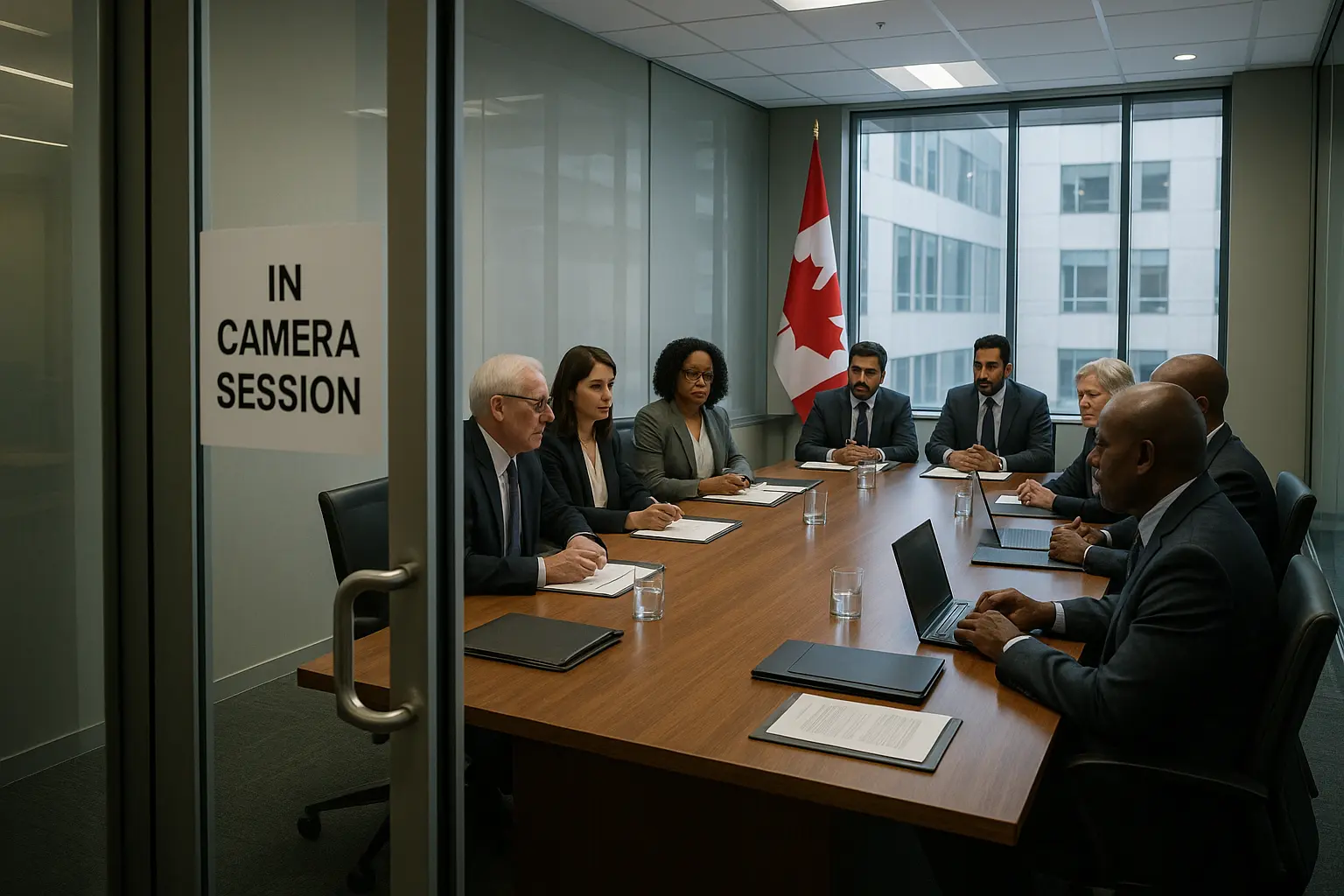
What Does In Camera Mean in a Board Meeting in Canada?
When a board meeting in Canada goes “in camera,” board members meet privately without staff or outsiders present.
This private session allows the board to discuss sensitive topics, especially the performance of the executive director and the board itself, in confidence.
The term comes from Latin, meaning “in chambers,” highlighting the confidential nature of these discussions.
These sessions are important for honest conversations that might not happen with others in the room.
They help boards provide clear feedback and ensure proper oversight of key leaders.
Understanding what in camera means helps us appreciate why boards use these meetings to keep critical matters protected and maintain trust within the organisation.
Definition of In Camera in Canadian Board Meetings

In camera meetings are private sessions where only board members are present.
These meetings focus on sensitive topics that require confidentiality.
The term’s origin and legal meaning are important in Canadian board governance.
Origin and Meaning of the Term
The phrase in camera is Latin, meaning “in chambers” or “in private.”
It shows that part of a board meeting happens away from the public and non-board members.
These sessions are sometimes called board-only meetings because only board members attend.
Such meetings provide a confidential space for open discussion.
Unlike regular board meetings, in camera meetings exclude senior staff like the CEO unless specifically invited for a relevant issue.
This approach increases honest dialogue and supports the board’s independent oversight role.
Legal Interpretation in Canada
Canadian law recognises in camera sessions as essential for handling confidential or sensitive matters.
The law requires these meetings to be documented separately from regular board minutes to maintain confidentiality.
While details are private, decisions made during these sessions must be recorded in official board minutes as a legal record.
In camera meetings may cover personnel issues, legal disputes, or strategic plans that cannot be made public.
Boards must use these sessions responsibly, balancing transparency with the need for privacy.
Abuse of in camera meetings can cause legal or ethical problems, so boards call them only when necessary.
In Camera vs Regular Board Meetings: What’s the Difference?
Understanding the distinctions between regular board meetings and in camera sessions helps boards use each appropriately.
| Aspect | Regular Board Meeting | In Camera Session |
| Who Attends | Board members, staff, sometimes public | Board members only |
| Topics Discussed | General business, reports, approvals | Sensitive/confidential matters |
| Minutes | Public or widely shared | Confidential, restricted access |
| Frequency | Monthly, quarterly (scheduled) | As needed, often at each meeting |
| Legal Requirement | Required by bylaws | Recommended best practice |
| Duration | 1-3 hours typical | 15-30 minutes typical |
| Transparency | Open to appropriate stakeholders | Strictly confidential |
| Decision Recording | Standard minutes format | Separate confidential records |
| Purpose | Conduct organisation’s business | Discuss sensitive board matters |
Regular board meetings handle the majority of governance work. In camera sessions complement these meetings by providing a protected space for discussions that require absolute confidentiality.
Both types of meetings are essential for effective governance, serving different but equally important functions.
Purpose and Importance of In Camera Sessions
In camera sessions serve a clear role in board meetings.
They let us handle private matters carefully and create an environment where board members can speak freely without outside influence.
This protects sensitive information and supports honest decision-making.
Confidentiality and Sensitive Matters
In camera sessions keep sensitive topics confidential.
When we discuss legal matters, personnel concerns, or proprietary information, a private session ensures this information stays within the board only.
By keeping these discussions separate from the main minutes, we protect the board and the organisation from potential risks.
This confidentiality is critical in legal disputes or negotiations.
Minutes from in camera sessions are recorded but kept separate and confidential.
This limits access and reduces the chance of sensitive information spreading beyond the board members present.
Promoting Candid Discussion Among Board Members
In camera sessions give us space to speak openly without outside pressure.
Without staff or guests, board members can share honest opinions and raise concerns they might otherwise hesitate to mention.
This openness leads to better decisions because we address all issues honestly.
It also strengthens trust among board members as we discuss matters directly and clearly.
We can use these sessions to evaluate our own performance or discuss sensitive internal issues.
This helps improve how the board functions and supports good governance.
How to Conduct an In-Camera Session: Step-by-Step Guide
Following proper procedure ensures your in-camera sessions are effective and legally sound. Here’s how Canadian boards should conduct these meetings:
Before the Meeting:
- Add to Agenda The board chair includes “In Camera Session” on the meeting agenda. This maintains transparency about the process while protecting confidentiality about specific topics.
- Prepare Topics List Identify confidential matters requiring private discussion. Common topics include executive director performance, board self-assessment, conflicts of interest, legal matters, or sensitive strategic issues.
- Notify Attendees Inform board members about the in camera session and clarify who will be excused. Staff should know they’ll be asked to leave for a portion of the meeting.
- Arrange Minute-Taking Designate who will record confidential minutes. This is often the board secretary or another board member, not staff.
During the Meeting:
- Call the Session The board chair announces: “We will now move in camera” or “We will now go into closed session.” This signals the transition clearly.
- Excuse Non-Members Staff and guests leave the meeting room or virtual meeting platform. Thank them for their contributions before they depart.
- Verify Attendance Confirm only authorised individuals remain. For virtual meetings, verify each participant’s identity and that no unauthorised persons are present.
- Discuss Matters Address agenda items requiring confidentiality. Encourage open, honest dialogue while maintaining professional respect.
- Make Decisions Vote on motions if needed, with proper recording. Ensure all decisions are documented clearly.
- Record Minutes Document discussion points and decisions separately from regular minutes. Focus on decisions made and key points, not every opinion expressed.
After the Meeting:
- Reconvene Open Session The board chair announces return to regular meeting: “The in camera session is now concluded, and we will return to regular session.”
- Store Minutes Securely Keep in camera minutes in restricted, confidential files. Limit access to current board members only.
- Communicate Decisions The board chair follows up on any actions, such as providing feedback to the executive director or implementing decisions made in camera.
- Review Annually Assess whether in camera procedures are working effectively. Consider whether sessions are happening regularly enough and whether confidentiality is being maintained.
Who Attends In Camera Meetings
In camera meetings are private sessions with controlled attendance.
The goal is to create a secure space for board members to discuss sensitive issues.
Only specific people attend, depending on their role and the topics.
Role of Board Members
In camera meetings usually include only board members.
These members have legal responsibilities to the organisation.
Their role is to discuss topics like personnel matters, legal issues, or performance reviews without outside influence.
The board of directors often meets separately to share honest opinions and make decisions confidentially.
This private time lets them debate issues fully and handle sensitive information that should not be shared publicly.
Sometimes, the executive director or CEO may be invited to attend in camera sessions.
This happens when their input is necessary, but their presence depends on the board’s rules and the agenda.
The board may limit attendance to keep discussions frank and focused.
Exclusion of Management and Staff
Generally, management and staff do not attend in camera meetings.
These sessions exclude those who normally support the board during regular meetings.
This keeps sensitive discussions between board members only.
Excluding management ensures the board can discuss matters like the CEO’s performance or other confidential topics openly.
It prevents conflicts of interest and protects privacy.
Sometimes, an external auditor or legal advisor might be invited.
This is rare and only happens with clear board approval.
The board controls who is present to maintain strict confidentiality.
When and How In Camera Sessions Are Held
Boards plan in camera sessions carefully to protect sensitive information.
The board chair usually decides when to hold these private sessions during a board meeting.
The process involves setting a clear agenda for confidential topics.
Timing Within the Board Meeting
In camera sessions usually happen at the start or end of a board meeting.
This lets board members talk freely without outside participants.
Sometimes, the session lasts only part of the meeting, depending on the issues.
The board chair can call the meeting in camera when confidential or sensitive matters need attention.
Common reasons include discussions about senior staff or potential conflicts of interest.
These private discussions help keep delicate topics secure.
Setting the Agenda for In Camera Discussions
The agenda for an in camera session focuses on specific confidential matters.
The board chair often works with other directors to decide which topics need privacy.
Common items include personnel issues, legal concerns, or conflicts involving directors.
The agenda is usually clear but limited to avoid unnecessary disclosure.
Although detailed minutes are sometimes recorded, they remain confidential and separate from the regular board minutes.
Keeping the agenda precise ensures the meeting stays efficient and protects sensitive information.
Topics Typically Discussed in In Camera Sessions
In camera sessions let board members raise sensitive topics that require privacy.
These discussions often focus on evaluating leadership, assessing board effectiveness, and addressing legal or ethical concerns.
The goal is to ensure proper governance without management or staff present.
Performance Reviews and Evaluations
We use in camera sessions to discuss the executive director’s performance.
This gives us space to provide honest feedback about their work without putting them on the spot.
It helps us evaluate how well the executive director is meeting goals and handling responsibilities.
During these sessions, we may share both compliments and concerns about the executive director’s performance.
This feedback is later communicated by the board chair to the executive director.
Reviewing performance confidentially helps maintain trust and support leadership development.
Board Self-Assessment and Conduct
In camera time lets us reflect on our own work as board members.
We review how well meetings go, discuss ways to improve teamwork, and address issues with individual member conduct if needed.
This honest self-assessment is essential for holding ourselves accountable.
We might evaluate the board’s decision-making process or consider whether we are fulfilling our duties effectively.
Having this conversation privately encourages openness and helps us build a stronger board culture.
Conflicts of Interest and Legal Issues
We use in camera sessions to manage conflicts of interest discreetly.
If any board member faces a potential conflict, we discuss it confidentially to protect the organisation’s integrity.
This includes deciding how to manage or resolve such conflicts.
We also handle legal matters or sensitive disputes during these closed meetings.
This ensures confidentiality while allowing us to take the necessary steps to address risks or compliance concerns.
It safeguards both the board and the organisation.
Common Mistakes Boards Make with In Camera Sessions
Even experienced boards sometimes mishandle in camera meetings. Avoiding these common errors strengthens governance and maintains trust.
1. Holding In Camera Sessions Too Rarely
The Problem: Some boards only meet in camera when there’s a crisis, making these sessions seem unusual or threatening. Board members may feel anxious when an in camera session is suddenly called, wondering what’s wrong.
The Solution: Hold brief in camera sessions at every board meeting to normalise the practice and address issues before they escalate. Even a five-minute check-in where the board chair asks “Does anyone have concerns to raise?” makes these sessions routine rather than alarming.
Why It Matters: Regular in camera sessions prevent small issues from becoming major problems and create a culture of open communication.
2. Excluding the Executive Director Unnecessarily
The Problem: Automatically removing the executive director from all in camera discussions, even when their input would be valuable. This can damage the relationship between the board and executive director.
The Solution: Invite the executive director for relevant portions of in camera sessions, then ask them to leave for discussions about their performance or sensitive board-only matters. Many effective boards have two in camera segments: one with the executive director present and one without.
Why It Matters: Including the executive director when appropriate builds trust and ensures the board has necessary information for decision-making.
3. Failing to Keep Proper Minutes
The Problem: Not documenting in camera sessions at all, or keeping excessively detailed notes that create liability. Some boards avoid minutes entirely, thinking nothing should be written down. Others record every comment, creating risks.
The Solution: Record decisions and key discussion points without excessive detail. Focus on “what” was decided, not every opinion expressed. Minutes should be sufficient to show the board acted responsibly but not so detailed that they reveal individual positions on sensitive matters.
Why It Matters: Proper documentation protects the board legally while maintaining necessary confidentiality.
4. Using In Camera Sessions to Avoid Difficult Conversations
The Problem: Moving important organisational decisions into in camera to avoid staff input or transparency. Some boards use in camera sessions to make decisions that should involve broader discussion.
The Solution: Reserve in camera for truly confidential matters. Most organisational business should happen in regular session with appropriate stakeholders present. If staff would normally be consulted on a decision, it probably shouldn’t be made in camera.
Why It Matters: Misusing in camera sessions undermines transparency and can damage organisational culture.
5. Poor Communication About Outcomes
The Problem: Decisions made in camera never get communicated to those affected, causing confusion and mistrust. The executive director might wonder why board behaviour suddenly changes without explanation.
The Solution: The board chair should follow up promptly on any in camera decisions, communicating outcomes appropriately while maintaining confidentiality. For example, after discussing executive director performance, schedule a meeting to share feedback.
Why It Matters: Decisions that never get implemented waste board time and undermine effectiveness.
6. Inadequate Security for Virtual Sessions
The Problem: Conducting in camera sessions via unsecured video calls or not verifying who’s present. Some boards use free, unencrypted platforms or don’t check whether participants are truly alone.
The Solution: Use encrypted platforms, verify participant identity, and follow virtual meeting security protocols. Ask each participant to confirm they’re in a private location at the start of in camera discussions.
Why It Matters: Confidential information leaked through poor security can harm the organisation and expose board members to liability.
7. Not Having Clear Bylaws About In Camera Sessions
The Problem: No written policy on when and how in camera sessions happen, leading to inconsistent practices. New board members don’t know what to expect, and disagreements arise about procedures.
The Solution: Include in camera procedures in your board governance policy or bylaws. Specify when sessions occur, who may attend, how minutes are handled, and confidentiality expectations.
Why It Matters: Clear policies prevent confusion and ensure all board members understand their responsibilities regarding confidential discussions.
Best Practices and Guidelines for In Camera Meetings
In-camera meetings require careful handling to ensure confidentiality and proper governance.
We must keep clear records while protecting sensitive information.
Regular sessions help normalize the process, and managing perceptions is key to trust and transparency.
Documenting and Reporting Outcomes
We document in-camera meetings separately from regular board minutes.
These minutes should include the session’s purpose, the decisions made, and reasons when possible.
Only those present in the closed session have access to these records.
They must stay confidential to protect sensitive information.
Once adopted by participants, in-camera minutes become official but remain restricted.
This way, the board maintains accountability without exposing confidential discussions.
The board chair oversees this process and ensures accurate, clear records are kept and securely stored.
Establishing Regular In Camera Sessions
Holding in-camera sessions regularly, ideally at every board meeting, helps normalize private discussions on sensitive topics.
We recommend starting each meeting with a closed session including senior staff and then one with board members only.
This structure provides space for candid conversations and managerial updates while keeping clear boundaries on confidentiality.
Regular sessions help reduce suspicion and show that in-camera meetings address issues properly, not to hide information.
Managing Perceptions of Secrecy
We must balance confidentiality with transparency.
In-camera meetings can create concerns about secrecy if not managed well.
Clear communication about the purpose and rules of these meetings helps.
We can explain that sensitive topics require private discussion for effective governance.
Sharing summaries of decisions without confidential details can reassure stakeholders.
The board chair plays a crucial role in this communication.
By addressing concerns directly, we build trust while protecting sensitive information appropriately.
Conclusion
In-camera meetings let boards discuss sensitive topics privately.
These sessions protect confidential information and enable open, honest dialogue among board members.
We recommend all boards review their policies on in-camera meetings.
Clear rules on attendance, documentation, and confidentiality are essential to maintain trust and comply with legal standards.
For more guidance on managing board meetings and policies, visit our website at orghub.ca.
We provide tools and resources to help boards navigate complex governance topics like in-camera sessions with confidence.
Frequently Asked Questions
We will cover what an in camera meeting means, why it gets its name, and the role it plays in board meetings.
We also explain how Robert’s Rules of Order apply, especially around meeting minutes and documentation.
What is the meaning of in camera meeting?
An in camera meeting is a private session where only board members or select individuals can attend.
It is used to discuss sensitive topics away from the public or other staff.
Why is it called in camera session?
The term “in camera” is Latin for “in chambers,” meaning the meeting happens behind closed doors or in private.
It ensures confidentiality for certain discussions.
What are Robert’s rules for in camera session?
Robert’s Rules allow a board to move into a closed session for private matters.
A formal motion is required to enter and exit the in camera session during a meeting.
Could you explain the purpose of an in camera session during a board meeting?
In camera sessions let boards discuss legal, personnel, or other sensitive issues openly.
They provide a safe space for honest discussions without public or staff influence.
How does Robert’s Rules of Order pertain to in camera meeting minutes?
Minutes for in camera sessions must be recorded but kept confidential.
They should include the topics discussed and decisions made, similar to regular meetings but handled with care due to sensitivity.
Do you take minutes for in camera sessions?
Yes, we take minutes during in camera sessions. We keep these minutes separate from regular meeting minutes.
They remain confidential and only authorised individuals can access them.