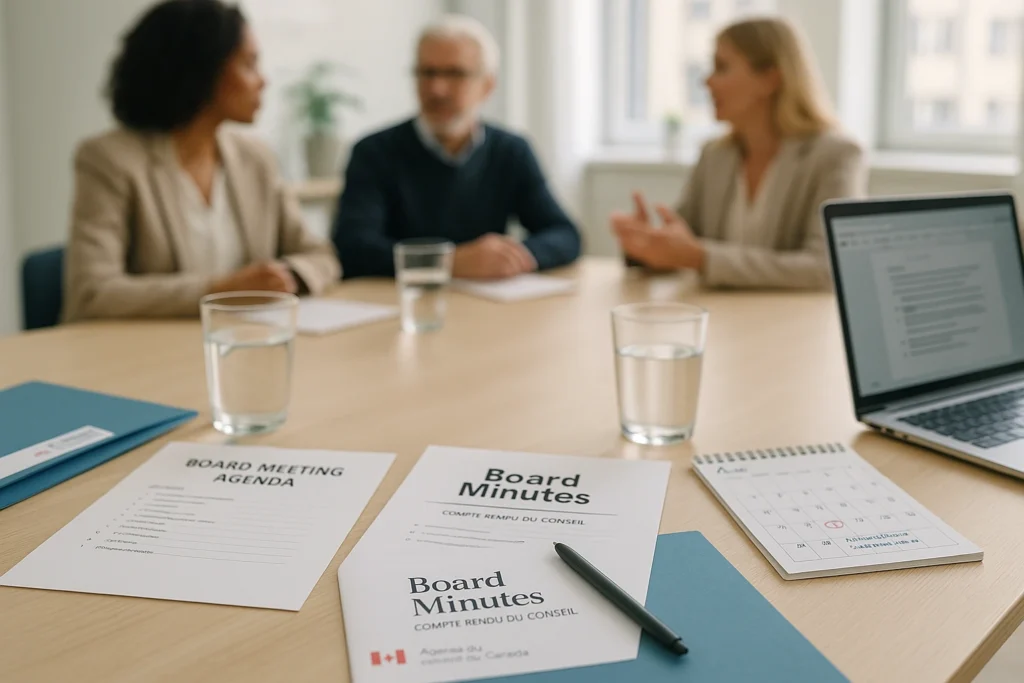
How to Run a Board Meeting Script for Canadian Nonprofits
Running a successful board meeting in Canada requires a clear, organized script that guides discussion, decision-making, and record-keeping.
A board meeting script helps us stay on track, cover key topics, and allows every member to participate effectively.
Following a structured script keeps meetings productive and respectful of everyone’s time.
Our script should include essential parts like calling the meeting to order, confirming quorum, reviewing minutes, handling old and new business, and closing the meeting.
We also plan for motions, discussions, and voting in a way that fits Canadian board practices and bylaws.
A strong script supports a clear agenda and keeps the meeting focused on our organization’s goals.
Understanding Board Meetings in Canada

Board meetings in Canada follow specific rules and have clear purposes.
Laws and bylaws guide these meetings, helping organizations stay organized and meet their goals.
Purpose and Legal Framework
Board meetings are formal gatherings where directors make key decisions.
Our main goal is to manage the organization’s affairs and follow legal duties set by federal and provincial laws.
These laws ensure directors act responsibly and transparently.
Bylaws set the rules for how meetings run, including frequency and requirements for valid decisions.
They often specify quorum, which is the minimum number of members needed to make decisions binding.
Following the legal framework protects the organization and its directors from risks.
It also keeps governance clear and consistent.
Types of Board Meetings
We might hold several types of board meetings.
The main types include:
- Regular meetings, scheduled in advance to handle routine business.
- Special meetings, called for urgent matters outside regular schedules.
- Annual General Meetings (AGMs), where members review overall performance and elect directors.
Each type serves a unique function and must follow the organization’s bylaws and legal requirements.
Knowing the differences helps us prepare the right agenda and materials for each meeting.
Importance of Board Meetings
Board meetings are crucial for good governance and decision-making.
They provide a structured space for directors to discuss important topics and approve actions.
Effective board meetings keep communication clear and ensure all members can contribute.
This helps us avoid confusion and keeps the organization moving forward.
Using a board meeting script helps us cover all agenda items and respect everyone’s time.
Clear, transparent processes support legal compliance and strong leadership in Canada.
Need to capture every decision with clarity? Click here to explore How to Write Minutes for a Board Meeting and elevate your nonprofit governance.
Key Roles and Responsibilities
Running an effective board meeting depends on clear roles and duties.
Each participant must understand their responsibilities to keep the meeting focused and productive.
Each role has specific tasks that support proper decision-making and smooth meeting flow.
Board Chair and Chairperson
The Chair leads the meeting and guides the board’s work.
They set the agenda and keep discussions on topic and relevant to the organization’s goals.
The Chair encourages input while keeping time and order.
They manage debates and help the board reach consensus efficiently.
The Chair works with other leaders to delegate tasks and clarify complex issues before votes.
They confirm quorum, open and close proceedings, and control voting processes.
This role requires strong leadership and communication skills.
Board Secretary Duties
The Secretary manages meeting documentation and organization.
They prepare and distribute the agenda and supporting materials ahead of time.
During meetings, the Secretary records minutes, capturing decisions, motions, and key points accurately.
Their notes become the official record of the board’s actions.
The Secretary also manages attendance, follows up on action items, and ensures bylaw compliance.
They coordinate logistics with the Chair and support smooth workflow before, during, and after meetings.
Executive Director and Treasurer
The Executive Director acts as a liaison between the board and daily operations.
They provide reports on organizational performance and support agenda development.
The Treasurer oversees financial reporting and presents budget updates during meetings.
They highlight areas needing board approval, such as expenditures or budget changes.
Together, the Executive Director and Treasurer help the board manage operational and financial matters.
Board Members
Board members participate actively in discussions and decision-making.
They review materials, ask questions, and provide diverse perspectives on agenda items.
Members follow meeting protocols, respect speaking turns, and aim for consensus.
They may be assigned specific roles or tasks based on their skills.
Active participation strengthens the board’s effectiveness and helps the organization meet its goals.
Preparing for a Board Meeting
To have an effective meeting, we need to plan and organize key elements ahead of time.
This includes setting a clear agenda, informing all participants in advance, and confirming enough members are present to make decisions.
Crafting the Meeting Agenda
We start by creating a detailed agenda that lists every discussion topic and action point.
The agenda acts as our roadmap, keeping the meeting on track.
It should include:
- Call to order
- Approval of the previous meeting’s minutes
- Reports from officers or committees
- Old and new business
- Any motions or votes
We tailor the agenda to fit our organization’s size and type.
It’s important to share the agenda in advance so board members can prepare.
Notifying Attendees and Distributing Materials
Once the agenda is set, we send all board members a formal meeting notice.
This notice includes the time, date, and location, following bylaw requirements for notice periods.
We also distribute the board pack with important documents like financial reports and committee updates.
Providing materials ahead of time lets members review and prepare questions or comments.
Clear communication ensures everyone arrives ready and leads to better decision-making.
Establishing a Quorum
Before starting, we check if a quorum is present.
A quorum is the minimum number of board members needed to make decisions.
Our bylaws define this number, usually a majority of the board.
Without a quorum, the board cannot vote or pass resolutions.
We conduct a roll call or another method to confirm attendance.
If a quorum isn’t met, we postpone decisions until more members join.
Ensuring quorum protects the validity of the meeting and its decisions.
Conducting the Board Meeting: Step-by-Step Script
Running a board meeting smoothly requires clear steps and a prepared script.
We focus on maintaining order, approving documents, and reviewing reports to keep the meeting productive.
Calling the Meeting to Order
We begin by confirming that a quorum is present.
This is necessary before any official business starts.
The chair calls the meeting to order with a clear statement, including the time and date.
For example:
“The meeting of the board of directors of [Organization Name] is now called to order at 7:00 p.m. on September 14, 2025.”
Starting on time and establishing control keeps the meeting focused.
Approval of Agenda and Previous Minutes
Next, we approve the agenda and the minutes from the previous meeting.
Board members should have received these in advance.
We ask for any changes or additions to the agenda.
Any amendments must be agreed upon before proceeding.
We confirm the accuracy of the previous meeting’s minutes and address corrections.
The chair might say:
“Are there any amendments to the agenda or any objections to approving the minutes as circulated? If none, the agenda stands approved, and the minutes are confirmed.”
This step ensures everyone agrees on the plan and that records are accurate.
Reports and Financial Updates
After approvals, we invite reports from officers and committees.
The executive director, treasurer, or committee chairs present their updates clearly.
Financial reports are especially important.
We review key figures like budget status, expenditures, and forecasts.
If there are questions or concerns, we discuss them but keep the discussion focused.
For example:
“Now, the treasurer, [Name], will present the financial report covering the last quarter.”
This stage supports transparency and informed decisions.
Addressing Meeting Business
We organize meeting business clearly to keep the board focused and efficient.
This includes reviewing unfinished tasks, introducing new topics, and sharing updates or announcements.
Old Business Review
We start by reviewing old business, which covers unfinished items from previous meetings.
This ensures accountability and progress.
Each item is discussed to check on updates and actions taken since the last meeting.
We ask responsible members for status reports or any challenges.
If decisions or follow-ups are still needed, we prioritize them to close out old business.
We also check that all past motions or approvals are recorded and completed.
New Business Introduction
New business includes fresh topics brought by board members or management for discussion or decision.
We only accept new items that were properly submitted before the meeting or are urgent.
We state each new business item and its purpose.
We allow time for questions, debate, and clarification.
When appropriate, we move to vote on new business items.
Clear motions and seconds keep decision-making orderly and transparent.
Introducing new business accurately helps the board focus on priorities.
Other Business and Announcements
Other business covers brief updates or matters that do not require formal discussion or voting.
We reserve time for announcements such as upcoming events or changes in committee members.
This section also includes reminders about deadlines or requests for voluntary participation.
Keeping other business separate from formal agenda items keeps meetings focused.
Concluding the Meeting and Follow-Up
At the end of the board meeting, we review key decisions and tasks, ensure accurate documentation, and plan next steps.
This keeps everyone accountable and prepares us for future meetings.
Summarizing Action Items
Before we end the meeting, we review all action items clearly.
Each task should have a responsible person assigned and a due date.
This ensures everyone knows their responsibilities and timelines.
We can use a simple list or table to organize this information.
For example:
| Task | Responsible Person | Due Date |
| Prepare financial report | Treasurer | Oct 10, 2025 |
| Review fundraising plan | Fundraising Chair | Sep 30, 2025 |
Confirming this summary out loud helps avoid confusion.
It also keeps the board focused on what needs to be done after the meeting.
Recording and Approving Meeting Minutes
The meeting minutes are the official record of our discussions and decisions. We take detailed notes during the meeting or use a board meeting minutes template to ensure we capture everything.
Minutes should follow the agenda format and highlight key decisions and assigned tasks. After the meeting, we review the draft minutes for accuracy before sending them to the board.
At the next meeting, we formally approve the previous minutes. This confirms everyone agrees with the record and keeps a clear history of our decisions.
Adjournment and Setting the Next Meeting
We close the meeting by announcing the adjournment. This marks the end of official business.
Before finishing, we set the date, time, and location for the next meeting. Scheduling early helps members plan ahead.
We confirm the details with the board soon after. This keeps our meetings organised and transitions smooth.
Conclusion
Running a board meeting in Canada takes careful planning and clear communication. By following a structured script, we keep meetings smooth and decisions fair.
As board members, we respect roles, follow agendas, and engage in meaningful discussion. Keeping meetings professional builds trust and encourages participation.
Recording accurate minutes and handling votes properly protects our organisation’s integrity. For more tips and resources, visit orghub.ca.
Our website offers practical tools and guides for your board’s work. Let’s strengthen governance and make every meeting count.
Frequently Asked Questions
Running a board meeting script needs clear steps and careful wording. We organise the meeting from opening to closing, making sure everyone knows their roles.
How to run a board meeting script?
We start by preparing an agenda with key topics and timings. The script guides us through calling the meeting to order, reviewing minutes, handling reports, and managing motions.
We use clear, direct language to keep conversations on track. The script has prompts to encourage participation and smooth transitions between agenda items.
How to run a board meeting step by step?
First, we call the meeting to order and confirm quorum. Then, we approve the agenda and past minutes.
Next, we review reports, discuss business, and handle motions. We manage debate by setting time limits and calling for votes when needed.
Finally, we adjourn the meeting once we cover all items.
What do you say when chairing a board meeting?
At the start, we say, “I hereby call this meeting to order.” We confirm quorum and welcome members.
As chair, we introduce each agenda item and ask for motions or comments. We summarise discussions and call for votes when needed.
We remind everyone to stay respectful and on topic.
How to start a meeting script?
We open by stating the date and time and confirming quorum. Next, we welcome members and outline the meeting’s goals.
We then approve the agenda and previous minutes. This gives structure and helps everyone understand the meeting’s purpose.
What are the 5 P’s of running a meeting?
They are Purpose, Preparation, Participation, Process, and Progress. We focus on a clear Purpose and thorough Preparation.
We encourage Participation, follow an orderly Process, and track Progress on actions. Using the 5 P’s keeps the meeting effective and goal-oriented.
What to say when presiding a meeting?
Speak clearly and confidently. For example, say, “Let’s move on to the next item.”
You can also say, “I now open the floor for discussion.” Call for votes with, “All in favour, please say aye.”
Keep the meeting orderly and productive. Support member contributions throughout the meeting.